

Meet the Clerihew!
How to Doggerel, Lesson 1

Doggerel, which we celebrate on this site, is not high art. In fact, it’s meant to be quick, casual and (sometimes) commemorative of a fleeting event or celebration. The Poetry Foundation defines it thusly: “Bad verse traditionally characterized by clichés, clumsiness, and irregular meter. It is often unintentionally humorous.” Wordsworth and Tennyson did not write doggerel, though they wrote to commemorate coronations and funerals.
Geoffrey Chaucer, Jonathan Swift and Ogden Nash, on the other hand, wrote in doggerel when it suited them. Such casual and acerbic company suits me just fine.
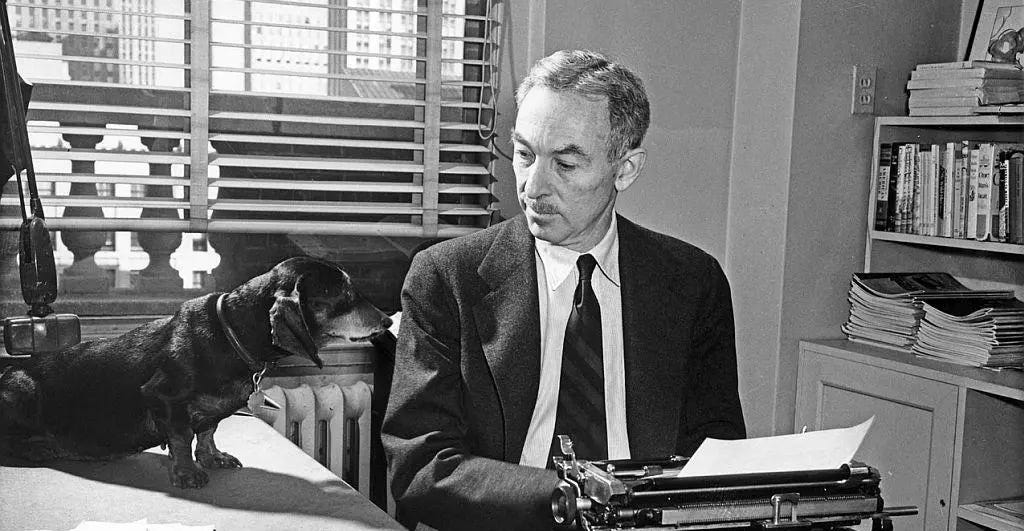
Doggerel can take many poetic forms. One of my favorites is the clerihew. It’s less well known than the limerick, which is a damn shame. Limericks are great when they work, but (and I have friends who remind me of this all the time) the meter should be strictly adhered to. Additionally, for a lim to go from good to great requires attention to internal rhymes and word play. Sometimes the words are willing, but the inspiration just isn’t there.
Consider the clerihew as an alternative to the limerick. It’s meant to be comic, and a little exaggerated. And a clerihew actually depends on meter that is clumsy, extended or erratic, to spoof the restrictions of poetic rules.
The format is easier to remember than the recipe for making ice.
Famous name
Rhyme famous name
Next line
Rhyme next line
Got that? That’s a quatrain of an AABB rhyme scheme. The famous name can be real or fictional, so a baseball doggerelist could even try:
Casey at the bat
Dug in his spikes, doffed his hat,
Filled the Mudville fans with hope
But instead became a universal trope.
The clerihew above actually makes a point and elaborates on the legend of Casey we all know. But making a point is beside the point. The real fun of a clerihew comes in being silly or outrageous because, why not? It’s only four lines long, and how much meaning can you really pack in it?
(For the historically minded, the clerihew was invented by Edmund Clerihew Bentley in 1891, when he was a 16-year-old student at St. John’s School in London. When they saw his new form of poetry, his classmates, including G.K. Chesterton, spent many hours composing them about historical characters, contemporary figures and possibly their own teachers. W.H. Auden also enjoyed the form, and it was so popular in England for much of the 20th century that newspapers often ran contests for clerihew writers. For more on Bentley, check out this New Yorker article on the release of his book, The First Clerihews, illustrated by Chesterton himself.)
Clerihews have often helped me fill the regular-season news hole Bardball demands. This is especially true during the All-Star break, when there are no games or feats of athletic prowess to comment on. Every July, I look over the names of the men who’ve been voted into the All-Star roster and try to compose clerihews for them. (I’m always hoping for new players or ones with interesting names to be selected. It’s difficult and a little boring to try and rhyme “Lopez” year after year.) So, for players with uncommon names, the possibilities are endless:
Camilo Doval
Loves music atonal.
Get him started on Anton Webern
Only if you have time to burn.Lars Nootbaar
Is buying a root farm,
Gonna grow some carrots, beets, and parsnips.
“Root for my rutabagas!” he quips.
Sometimes a player’s current accomplishments don’t need much more than four lines:
Bobby Witt
Sure knows how to hit:
Finished July hitting .489 for the month
As good as Lou Gehrig (1930) did onth.
(And see? You can add a little Ogden Nash wordplay in there.)
Since baseball is a team sport, clerihews can be quite versatile. During last year’s NLCS Game 1, I managed to string together some clerihews to summarize the dominance of the Dodgers and the crazy 8-6-2 double play in the fourth:
Blake Snell
Was a vision of Hell
If your job happens to be hitting
For a living.Roki Sasaki
In the ninth started looking rocky.
You can be lights out
Until you’re not.So Blake Treinen
Came in
Nearly hit Turang
And ended things with a bang.But it was Sal Frelick
Showing no signs of panic
Who started a mid-air ground-out double play
That will be wondered at long after today.
How easy is that? We have more than 780 active major leaguers, plus managers, announcers and past players. And from Reese to Bazardo to Sosa, there’s plenty of room for playful verbiage.

Now it’s time to try your own clerihew. How could it be intimidating? You’ll be done before you know it! Just take a pencil and jot down a famous name and a silly rhyming sentence to make a couplet.
Andrew Benintendi / effendi, bendy, trendy
Aaron Judge / fudge, budge, sludge
Buster Posey / nosy, rosy, cozy
And then continue the thought into an unexpected place:
Buster Posey
Likes his mysteries cozy
But his action flicks
With punches and kicks.
Okay, not the best, but I just whipped it up. Write one better! It’s like skipping the Sunday Times crossword puzzle and doing the Mini.

I love the photos and the examples, Jim!